Since bin Laden
A video released
by Al-Sahab, the media wing of al-Qaeda last month shows Tehrik-e-Taliban
Pakistan (TTP) and its ally Punjabi Taliban were behind the guerrilla
terrorist attack on Pakistan Navy’s Mehran Base in Karachi on May 22 last.
In the video, four TTP militants were shown recording their statements prior
to the terrorist attack and said that their mission was meant to avenge the
killing of Osama bin Laden.
Security agencies and
analysts had predicted retaliatory attacks after bin Laden’s killing on
May 2, 2011 in Abbotabad. As the so-called retaliation did not materalise at
the scale predicted, many interpret that as regression in the al-Qaeda camp.
‘Tiger’ of Islam
Though physically eliminated, bin Laden survives as a metaphor in jihadi
literature
By Waqar Gillani
For the world bin
Laden may have been the number one terrorist on globe but for al-Qaeda
sympathisers in Pakistan he was a hero. A year after his death, thousands of
Islamists while protesting against American polices and War on Terror, term
him as a hero of their Islamic world.
Conspiracies abound
Did the Pakistan military have a clue to bin Laden’s whereabouts, as
the WikiLeaks would have you believe?
By Amir Mir
Although Pakistan
Army has already rejected a WikiLeaks claim that bin Laden was in routine
contact with several ISI officials while hiding in his Abbottabad compound,
which was only a kilometre from the prestigious Kakul Military Academy,
there is plenty of evidence to imply that some key officials in the
Pakistani military and intelligence establishment indeed knew of his den,
especially the former Army Chief, President General Pervez Musharraf.
Osama’s widow Amal al Sadeh’s revelation instantly raised the
million-dollar question: how did the world’s most wanted terrorist manage
to spend nearly a decade in Pakistan without being detected by the
intelligence agencies?
“As of now, there isn’t much support for bin Laden or al-Qaeda” — Rahimullah Yusufzai, a senior journalist who also had the opportunity
to interview
Osama bin Laden twice over in 1998 in Afghanistan
By Farah Zia
The News on
Sunday: One year after bin Laden’s death, how safe is the world or the
region?
Rahimullah Yusufzai: No,
the world or the region is not safe; there still are problems. The Americans
are saying the al-Qaeda remains a threat. Although the threat is diminished,
they are still very cautious. That is the reason the US forces are still in
Afghanistan; they will be staying there until 2014 and even after that. They
have already signed a strategic partnership agreement with the Afghan
government and it is possible they will have some military bases in
Afghanistan, use special forces, deploy air power, drones and also have CIA
agents. This is because they think there is still some threat from al-Qaeda
and its allies including Taliban.
Report awaited
Will the Abbottabad Commission meet with the same fate as many earlier
commissions in the country
By Aoun Sahi
The Abbottabad
Commission set up by the Prime Minister Yousuf Gillani on June 21, 2011, to
investigate the events of May 2 is still struggling to come up with a
report. It is already late by six months as per its deadline.
The commission is headed
by Justice (retired) Javed Iqbal while Lt-General (retired) Nadeem Ahmed,
ex-IG police Abbas Khan and former ambassador Ashraf Jehangir Qazi are its
members. It has met a host of Pakistani army and civil officials,
politicians, journalists, residents of Abbottabad and widows of bin Laden in
more than 20 sessions. Justice Javed Iqbal told the media early December
last year that the report would be completed by the end of the year. “We
will strongly recommend that the Commission’s report be made public,”
Justice Javed Iqbal had told the media
Al-Qaeda matters
The outfit remains a potent threat for global peace thriving on the
Pak-Afghan tribal belt
By Amir Mir
As the first anniversary of Osama bin Laden’s death approaches, it seems
the dynamics of al-Qaeda-sponsored terror campaign in the Pak-Afghan border
belt haven’t changed much and the situation for the US-led international
community remains as precarious as ever. While Osama’s killing certainly
struck a major blow to al-Qaeda and its jihadi affiliates in the Waziristan
tribal region bordering Afghanistan, Pakistan continues to be a hotbed of
Islamic extremism and militancy which have refused to die with bin Laden.
What a year it has
been. The raid and capture of Osama Bin Laden from an Abbottabad compound on
May 2, 2011 and what transpired in the year after reads more like how the
Pakistani state and society have evolved over the years. The incidents
throughout the year show us a mirror image of ourselves. Our vulnerability
and our chants of sovereignty offer a neat but sad contrast.
Was the Pakistani state
(read military) indeed ignorant of his presence or was it colluding with the
world’s most wanted terrorist? Or, was bin Laden getting support from
somewhere to be able to survive so well in this country for so many years?
At least there can’t be two views about the last observation.
And, then the setting up
of, yes you guessed it right, a judicial commission to probe the matter.
What exactly was it set up for? To see what went wrong in our security wall
that let the American gunship helicopters to land in Abbottabad, violating
our sovereignty or to see who allowed bin Laden to exist so comfortably in
the garrison city? Perhaps both, we vaguely know.
Except that a year since
the event, the report has still not been made public. While the eyes of the
outside world may still be set on the report, wondering why it’s still not
out, the cynical people of this country somehow already know its worth.
Months before the OBL
raid, the Pak-US relations were played out on the streets of Pakistan and on
television screens in another uneasy episode that came to be associated with
Raymond Davis. Then, too, we heard chants of sovereignty and American
attitude to finally see an embarrassing closure of the case. But the
mistrust that characterises the relations between the two countries seemed
to be an unending saga. It continued with the Nato forces’ strike on a
Pakistani military check-post on the Pak-Afghan border.
The
rulers want the people of the country to believe that it’s now the turn of
the politicians and the parliament to determine the rules of engagement with
the US. Meanwhile, the country continues to bleed with acts of terrorism by
jihadis that happen to be our own product and have a vague nexus with al-Qaeda
whose leader was Osama bin Laden.
A video released
by Al-Sahab, the media wing of al-Qaeda last month shows Tehrik-e-Taliban
Pakistan (TTP) and its ally Punjabi Taliban were behind the guerrilla
terrorist attack on Pakistan Navy’s Mehran Base in Karachi on May 22 last.
In the video, four TTP militants were shown recording their statements prior
to the terrorist attack and said that their mission was meant to avenge the
killing of Osama bin Laden.
Security agencies and
analysts had predicted retaliatory attacks after bin Laden’s killing on
May 2, 2011 in Abbotabad. As the so-called retaliation did not materalise at
the scale predicted, many interpret that as regression in the al-Qaeda camp.
Interestingly, a few weeks
after bin Laden’s death when no major response had emerged from the
terrorist outfit, a senior US analyst claimed that al-Qaeda would retaliate
after the 40-day mourning period was over, as per the Islamic tradition.
However, al-Qaeda’s brand of Islam does not believe in 40 days of
mourning. When no retaliation came even after the stipulated period of time,
the analyst declared the group was history.
Contrary to various
assessments, the world has seen few revenge attacks from al-Qaeda. In
Pakistan, five attacks were claimed by the Taliban as a response to bin
Laden’s death. These include the May 2011 attacks on Frontier Constabulary
(FC) headquarters in Shabqadar area of Charsadda district, US regional
assistant security officers in Peshawar, CID police station in Karachi, and
the September 2011 attack on Deputy Inspector General of FC in Quetta. The
Mehran Base attack was the most devastating of the lot in which two PC3
Orion maritime patrol aircrafts were also destroyed. The initial suspect in
the attack was not al-Qaeda and the media tried to find a foreign hand. The
al-Qaeda video suggests otherwise. This was the attack which allegedly led
to the killing of journalist Saleem Shahzad who had reported about al-Qaeda’s
sleeper cells inside Mehran Base.
Although this attack
fuelled apprehensions about further revenge attacks the last quarter of 2011
was comparatively peaceful in Pakistan. Security analysts attributed that to
a number of factors, mainly the ongoing military campaign against militants
in parts of the Federally Administrative Tribal Areas (FATA), increased
surveillance by law enforcement agencies and the arrest of 4,219 suspected
militants in 2011. The killing of key militants in US drone strikes in Fata
was another factor but it was less effective than the one in 2010. Some
security analysts also consider decentralization of the TTP and talks
between militants and the state as important factors in the decline in
violence. Al-Qaeda’s increasing concentration in Africa and the Arabian
Peninsula was believed to be yet another reason.
Apart from these factors,
the documents found from bin Laden’s compound reveal that he had already
almost lost operational control over al-Qaeda and was dependent upon a
courier for communication with his fellows. This could be one of the factors
that led to decentralisation of al-Qaeda. Bin Laden’s importance for the
militants was symbolic and his authority was supreme although he was not
exercising it. He was the glue for al-Qaeda and its affiliates.
His successor, Ayman Al-Zawahiri,
has failed to exert such sway. Al-Qaeda central command has loosened after
bin Laden’s death. Ideology is the major bond which glues the al-Qaeda
franchise. Its central command now depends on affiliates and allies, who
often have only peripheral or ephemeral ties to either the core cadre or
affiliated groups. These affiliates engage in an increasingly violent
campaign of attacks across the Middle East and North Africa, where support
for al-Qaeda remains fairly high, compared to Pakistan and other South and
East Asian Muslim states. The number of attacks by al-Qaeda and its
affiliates is on the rise even after bin Laden’s death, but these attacks
are getting more communal and sectarian in nature and al-Qaeda has failed to
launch a major terrorist attack in the US and Europe.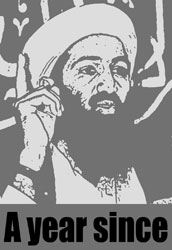
Although bin Laden’s
death has had significant impact on certain regions, especially West and
North Africa, but it has not changed the security dynamics in Iraq and
Pakistan, where al-Qaeda affiliates have returned to their previous agendas,
which are primarily sectarian and anti-state.
A look at Pakistan’s
security landscape confirms that. Most of the critical internal security
threats are still there. The traditional hotspots of sectarian and
anti-state violence in Pakistan are still active, indicating that structural
violence may persist in the years to come. Security experts believe that
sectarian violence would continue as a long-term challenge because there
were now strong nexuses among sectarian groups, Taliban and al-Qaeda.
Although military
operations and some state initiatives have contributed to blocking the flow
of funds to the militants, they continue to devise new ways to generate
money and have increased links with criminals with that aim. Terrorists are
involved in abductions for ransom across Pakistan. Some reports also suggest
that the terrorists are also aiding criminals in their activities. The writ
of the state has partially been restored in parts of Fata, but the security
situation remains volatile as militants dislodged from their strongholds
manage to relocate to other parts of the region. The critical challenges in
Balochistan and Karachi remain unaddressed.
Apart from these critical
security challenges, bin Laden’s death also did not help reduce the level
of the threat. Many tribal and Punjabi Taliban factions have transformed
into al-Qaeda franchises, and a centrally controlled leadership may not
contribute enough to restrain these home-grown militants from pursuing their
agendas. Al-Qaeda ideology and training have made them more lethal. They are
now strategically more diverse and their targets have also expanded beyond
sectarian to anti-state and whenever they find favourable circumstance, they
can turn into global jihadists. Although bin Laden had lost operational
control of al-Qaeda, his purpose was served. The militants do not need a
charismatic personality to keep them intact.
caption
Precisely what’s
Pakistan’s security landscape like, post bin Laden
By Muhammad Amir Rana
‘Tiger’ of Islam
Though physically eliminated, bin Laden survives as a metaphor in jihadi
literature
By Waqar Gillani
For the world bin
Laden may have been the number one terrorist on globe but for al-Qaeda
sympathisers in Pakistan he was a hero. A year after his death, thousands of
Islamists while protesting against American polices and War on Terror, term
him as a hero of their Islamic world.
Aides of Hafiz Muhammad
Saeed, the founder of Lashkar-e-Taiba and heading its welfare counterpart
Jamaat-ud-Dawa, while protesting against NATO supplies through Pakistan,
remind the US that this war is not finished with the death of Osama. “Bin
laden was an innocent martyr and his sacrifice will strengthen jihad because
it is not a war against terrorism but crusade war against Islam,” reads an
article in a recent issue of Jarrar, a JuD publication, while highlighting
the news of protests against NATO supply restoration. It said the Muslims
would avenge the bin Laden killing.
The Jihadi and Islamic
publications of JuD and Jaish-e-Muhammad and Karachi-based Zarb-e-Momin,
have also paid tribute to bin Laden in their weekly Friday publications for
the past one year.
The then Jaish-e-Muhammad
publication Al-Qalam termed bin Laden a great hero and defender of Islam —
“tiger of Islam”. “He fought till the last drop of blood and his
mission would continue,” the paper said. Similarly, JuD publication Jarrar
also gave special coverage to bin Laden and his mission and highlighted his
profile and mission for Islam.
Posters about an essay and
poetry contest eulogising Osama Bin Laden were quietly pasted on the walls
of Pakistan’s largest university in the first month of his killing. The
organisers, however, chose to remain anonymous, providing just an email id
to send submissions and later the competition was held quietly.
JuD chief Hafiz Saeed, who
has recently been put on a reward list of the most wanted terrorists by the
US, also offered funeral in absentia and led many Friday prayers in
Faisalabad, a city in central Punjab where a number of al-Qaeda leaders have
been arrested in the past including Abu Zubaida, and paid homage to Osama
declaring him as a “great hero” and “martyr” of Islam.
JuD, which managed rallies
with hundreds of activists, in various cities of Punjab, also offered
funeral prayer in absentia on May 3, led by Hafiz Saeed.
Maulana Tahir Ashrafi, in
his publication Hurria termed bin Laden as a martyr and hero of Islamic
jihadi movements in the world saying he had a three decades-long following
in Pakistan, since the time of Afghan jihad and he would never die.
“Bin Laden is not the
name of a person but a symbol of hatred and jihad against the infidels of
the world. People come and go in this world but the ideologies, which are
based on Allah and his Prophet Muhammad (PBUH), remain undefeated ever,”
said Al-Qalam in another one of its issues.
Conspiracies
abound
Did the Pakistan military have a clue to bin Laden’s whereabouts, as
the WikiLeaks would have you believe?
By Amir Mir
Although Pakistan
Army has already rejected a WikiLeaks claim that bin Laden was in routine
contact with several ISI officials while hiding in his Abbottabad compound,
which was only a kilometre from the prestigious Kakul Military Academy,
there is plenty of evidence to imply that some key officials in the
Pakistani military and intelligence establishment indeed knew of his den,
especially the former Army Chief, President General Pervez Musharraf.
Osama’s widow Amal al Sadeh’s revelation instantly raised the
million-dollar question: how did the world’s most wanted terrorist manage
to spend nearly a decade in Pakistan without being detected by the
intelligence agencies?
But instead of answering
these queries, the military authorities demolished the bin Laden compound on
February 28, probably because it was an embarrassing reminder of their
incompetence as well as their alleged complicity. It may be a coincidence,
but the OBL compound was razed the day a US-based global intelligence firm (Stratfor)
reported while citing WikiLeaks, that middle-to-senior-level officials in
the Pakistani military and the ISI knew the arrangements made for bin Laden
at his Abbottabad safe house.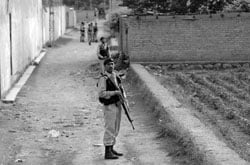
“Mid-to-senior level ISI
and Pak military, with one retired Pak military general, had knowledge of
the OBL arrangements and safe house,” wrote Fred Burton, Stratfor’s
vice-president for intelligence in an email message which was released by
WikiLeaks to his company’s regional director for South Asia (Kamran
Bokhari), soon after the May 2 Abbottabad raid. The email went on to say
that the names and specific ranks of these generals were unknown to the
writer, but added that the US intelligence may have had that information.
Burton, one of the
world’s foremost experts on security, terrorists and terrorist groups,
however, did not reveal his source, but did say that the source was based in
Pakistan. Burton’s email did not name the officials involved, but added
that the US could use the information as a bargaining chip in post-raid
negotiations with Islamabad, which had rebuked Washington after the raid.
Stratfor, which provides
analysis of world affairs to major global corporations, military officials
and government agencies, was given access to classified information papers
collected from bin Laden’s Abbottabad compound. The information leaked by
WikiLeaks through Stratfor suggested that up to 12 officials in the ISI knew
of the OBL safe house.
However, the Pakistani
Army spokesman, Major General Athar Abbas, had refuted the Wikileaks claim
about Osama’s alleged links with some ISI officials, terming it rubbish.
Denying allegations about contacts between Pakistani intelligence officials
and Osama, the Army spokesman said, “It is simply nonsense and mischievous
and tantamount to kite-flying; farthest from the truth. The so-called leaks
issued by a private US agency stem from nothing but baseless fabrication.
These kinds of charges are not new. These leaks are actually old wine in new
bottle.”
Yet, the army spokesman
failed to take notice of a February 18, 2012 The Washington Post article (by
David Ignatius), claiming that an architect regularly employed by the ISI
worked on the compound in which Osama was sheltered for years in Abbottabad.
Quoting intelligence
sources, the writer claimed that the architect was told that a highly placed
VIP was coming to the compound. According to David Ignatius, any probe on
Osama’s presence in Pakistan should focus on several issues, including how
the al-Qaeda chief came to Abbottabad in 2005 and what Pakistani officials
knew about his whereabouts.
The Washington Post
article also added: “Current Army Chief General Ashfaq Kayani was ISI
chief at the time, but the dominant figure was President Pervez Musharraf.
The commander of the PMA (Pakistan Military Academy at Kakul) in Abbottabad
from 2006 was Lt Gen Nadeem Taj, who succeeded Kayani as head of the ISI in
2007.”
Ignatius referred to
former ISI chief General Ziauddin Butt’s claim that the Abbottabad complex
was used by the Intelligence Bureau and noted that a report in the Pakistani
press in December 2011 had quoted him as saying that Osama’s stay at
Abbottabad was actually arranged by Brig. (r) Ijaz Shah, the head of the
Intelligence Bureau during 2004-2008, on Musharraf’s orders. General
Ziauddin Khawaja, also known as Ziauddin Butt, headed the ISI from 1997 to
1999.
General Ziauddin Butt
repeated his claim in the Feb 2012 issue of Newsweek, in an online interview
conducted by Bruce Riedel. Riedel quoted Lt Gen Butt as saying: “General
Musharraf knew that Osama bin Laden was in Abbottabad and his IB chief Ijaz
Shah had hired the bungalow for the fugitive al Qaeda leader.”
A four-star general, who
was the first head of the Army’s Strategic Plans Division which controls
the nuclear weapons, Ziauddin claimed that Ijaz Shah was responsible for
setting up bin Laden in Abbottabad, ensuring his safety and keeping him
hidden from the outside world. On the other hand, Musharraf has refuted
having any knowledge about Osama living in Pakistan during his tenure.
However, well-informed
intelligence circles in the garrison town of Rawalpindi concede that the
vital information about the bin Laden compound was actually provided to the
Americans by none other than a senior ISI official — a Brigadier — who
is now settled in the US, having claimed US$ 25m reward from the State
Department’s Rewards for Justice program. The Brigadier, who has already
been granted American citizenship along with his family, had reportedly
persuaded Dr Shakil Afridi, a Pakistani physician, to conduct a fake polio
campaign in the Bilal Town area of Abbottabad to help the US Central
Intelligence Agency hunt down Osama. The doctor under trial has already been
declared a national criminal by a Pakistani Judicial Commission, which is
probing the US raid in Abbottabad.
According to the Pakistani
intelligence circles, the Americans actually came to know of the fugitive
al-Qaeda chief’s location in the third quarter of 2010, after the
Brigadier left Pakistan and approached an American Embassy abroad. The CIA
subsequently set up a safe house in Abbottabad to monitor the OBL compound,
eventually concluding that some high value target was hiding there, along
with an extended Arab family. And, the May 2 raid was conducted only after
the Americans got hold of reliable intelligence about the identity of the
high-value target, ultimately killing the fugitive al-Qaeda chief Osama bin
Laden.
caption
Standing guard over facts.
Photo by Rahat Dar
q&a
“As of now, there isn’t much
support
for bin Laden or al-Qaeda”
— Rahimullah Yusufzai, a senior journalist who also had the opportunity
to interview
Osama bin Laden twice over in 1998 in Afghanistan
By Farah Zia
The News on
Sunday: One year after bin Laden’s death, how safe is the world or the
region?
Rahimullah Yusufzai: No,
the world or the region is not safe; there still are problems. The Americans
are saying the al-Qaeda remains a threat. Although the threat is diminished,
they are still very cautious. That is the reason the US forces are still in
Afghanistan; they will be staying there until 2014 and even after that. They
have already signed a strategic partnership agreement with the Afghan
government and it is possible they will have some military bases in
Afghanistan, use special forces, deploy air power, drones and also have CIA
agents. This is because they think there is still some threat from al-Qaeda
and its allies including Taliban.
Apart from Afghanistan,
they are also worried about al-Qaeda’s influence in the Middle East,
Yemen, Iraq and certain African countries. Bin laden was a founder,
financier and the spirit behind al-Qaeda but we have seen a younger
generation of fighters joining al-Qaeda, especially from Arab countries.
So al-Qaeda will have some
relevance even though the Arab Spring has affected it probably more than the
military operations.
TNS: So you do buy the
thesis that al-Qaeda has become irrelevant because of the Arab Spring?
RY: I think people now
have other options; they can bring about change through peaceful means
(though force had to be used in Libya and Yemen). When you can change
rulers, kings and dictators, and form your own government, there will be
less incentive to join al-Qaeda. But there will always be a hard core —
certain people who will want to use force because the Americans are using
force. There will still be reasons for people to join al-Qaeda. It will not
finish; it will remain present in some form.
TNS: How do you look at
the phenomenon of Pakistanisation of al-Qaeda viz. the nexus between it and
TTP or the Punjabi Taliban?
RY: Al-Qaeda is now more
dependent on the TTP than the Afghan Taliban. As long as the Afghan Taliban
were in power in Afghanistan, al-Qaeda was headquartered there. Bin Laden
and his colleagues were able to live there and were protected by the Afghan
Taliban. But that changed after they lost power and their own leadership was
displaced; al-Qaeda could no longer stay safe in Afghanistan and hence
shifted to Pakistan. So the relation between Pakistani Taliban and al-Qaeda
has become strong and its relation with Afghan Taliban has become weak.
After the death of bin Laden Afghan, leaders like Mullah Omar are not as
close to al-Qaeda leaders like Ayman al-Zwahiri as they were to bin Laden.
Al-Qaeda because of its
presence in Pakistan and because of its links with Pakistani Taliban is a
bigger threat in Pakistan than it is in Afghanistan now.
TNS: Beyond their physical
presence and protection, what about the convergence of interests between al-Qaeda
and Taliban?
RY: Because of its
dependence on Pakistani militants, it is not really such a big force that it
can dictate terms to the TTP; rather it’s the other way round. As for the
TTP, it is now mainly fighting in Pakistan; it is not even sending many
fighters to Afghanistan. It does have ambitions to launch attacks in the
West; it has been making claims and there were some links too, like in the
case of Faisal Shahzad. But these were just rare instances. So the TTP may
be thinking that links with al-Qaeda can help it in launching attacks
elsewhere in the world, especially in the West but that is not happening.
There aren’t many al-Qaeda
people left here in Pakistan but those who are, are not totally depending on
the TTP structure. They also have their own personal links. So there are
different relationships between some al-Qaeda agents and some TTP elements
or jihadis or even some Islamic parties. In some cases al-Qaeda people were
living with Jamaat-i-Islami members.
TNS: As a journalist, what
is your sense, whether Pakistan’s military was in the knowledge of his
whereabouts, considering the statements of some former generals etc.?
RY: I don’t believe that
the Pakistani army or intelligence agencies were aware of his presence in
Abbottabad in that house. Maybe they had general information that he could
be somewhere in Pakistan. If the army had wanted to protect him, it could
have put him up in one of its many garrisons; why put him outside where
there could be a raid by the Americans.
Bin Laden had declared war
against Pakistani state and al-Qaeda had issued statements asking Pakistani
people to revolt against their government and army. There was no love lost
between the two. They were in rival camps. So there was no incentive for
Pakistan to protect him. I believe, and I know it from my personal contacts,
that Pakistani military would always have wished that he was not found in
Pakistan or that he was captured and killed across the border because it
would have caused problems for it in the long run.
TNS: And, it seems it did.
How, in your view, has the killing of OBL in Pakistan affected the Pak-US
relations?
RY: Although the Americans
are not publicly saying that Pakistan government or military was involved in
giving him protection here, they are saying he had a support system.
Somebody somewhere knew his whereabouts and was helping him. It’s quite
possible because he could not have lived at so many places in Pakistan and
then Abbottabad with his families, without some local support system.
Pak-US relations have
always been very uncertain and distrustful. This was one more instance that
added to the lack of trust. What was a big achievement for the Americans was
a big embarrassment for Pakistan. It is easy to see the kind of impact this
would have on the relationship between the two countries. The Americans have
always been suspicious about Pakistan and its military establishment.
But I do think that
certain people in the Pakistani establishment were informed at the eleventh
hour that the Americans have entered Pakistan on gunship helicopters and
that they were after a high-value target and that Pakistanis should not come
in their way. It could have been just three four people including the
president, the army chief and the ISI chief. The Americans could not have
taken such a huge risk. It was only ten years after Tora Bora that the
Americans were finally getting some good intelligence about bin laden. They
had bombed Tora Bora but had missed him. Now they did not want to miss an
opportunity. That is why Obama said the chances [of success] were 60/40 but
they still went ahead and raided this house.
TNS: Were you surprised to
know that bin Laden was hiding here?
RY: No, I was not
surprised at all because where else could he have gone. This region was
familiar to him; he had lived here, built friendships, supported people,
given them money. So this was the place where he would be trying to hide and
seek refuge. Also, so many al-Qaeda people had been captured from Pakistan
before him and it was understandable that he would also be in Pakistan.
Then his biggest
supporters and protectors, the Afghan Taliban, were no longer in power and
themselves were in hiding in Pakistan. How could bin Laden stay in
Afghanistan? He had to be in this country and he had to be in a city. Most
of the important al-Qaeda figures had been captured from the Pakistani
cities. It’s easier to hide in bigger places; they need a support system
— electricity, computers, they need to stay in touch with al-Qaeda cells
all over the place and finally they have families living with them. It is
difficult for rich people to live in caves or remote places.
TNS: What about the
proceedings in the Abbottabad Commission? What direction have they taken,
and if and when its report comes, will it satisfy everyone?
RY: The Abbottabad
Commission has taken quite long; almost a year. They’ve met everybody. But
overall, the history of commissions in this country is such that people have
their reservations about the report being made public or its recommendations
being implemented, and also whether the commission will tell the whole story
about what happened. I don’t think we will be able to know the full story
even after the report is out. Security and political compulsions will also
come into play. That’s why I don’t have much hope that we will know more
than what we already do.
TNS: Is Osama bin Laden a
hero for a majority of Pakistanis?
RY: There was a time when
he was popular and a hero to many people because he had declared jihad
against the US. I remember that new-born boys were named after him. That was
a different period. There was no violence in Pakistan and people had not
seen the fallout of his jihad against the US. But as people started
suffering in Pakistan due to violence and acts of terrorism, the support for
al-Qaeda and Osama dropped. I don’t think a vast majority of people
consider him a hero at this point in time.
I don’t think he has
emerged as a hero even after his death. Maybe this will change. If the US
does not change its policy of supporting Israel and dictators in Muslim
countries, if the Muslim countries continue to be the B-teams or agents of
the US in future even after the establishment of democratic governments, a
time may come when people will say that Osama bin Laden was right. You
can’t bring a change through peaceful means. But that’s about the
future. Right now, I don’t think there is much support for al-Qaeda or bin
Laden or their line of thinking.
Report
awaited
Will the Abbottabad Commission meet with the same fate as many earlier
commissions in the country
By Aoun Sahi
The Abbottabad
Commission set up by the Prime Minister Yousuf Gillani on June 21, 2011, to
investigate the events of May 2 is still struggling to come up with a
report. It is already late by six months as per its deadline.
The commission is headed
by Justice (retired) Javed Iqbal while Lt-General (retired) Nadeem Ahmed,
ex-IG police Abbas Khan and former ambassador Ashraf Jehangir Qazi are its
members. It has met a host of Pakistani army and civil officials,
politicians, journalists, residents of Abbottabad and widows of bin Laden in
more than 20 sessions. Justice Javed Iqbal told the media early December
last year that the report would be completed by the end of the year. “We
will strongly recommend that the Commission’s report be made public,”
Justice Javed Iqbal had told the media.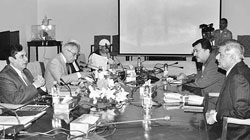
There could be many
reasons why the report is delayed so much. “It focused more time on
investigating whether Pakistan is responsible for helping the US find bin
Laden in Abbottabad rather than finding out who brought him to Abbottabad,”
said a source who is privy to the proceedings of the commission.
“They focused more on
Husain Haqqani and Dr Shakeel Afridi instead of answering the suspicions of
the West that al-Qaeda chief had a support network. Somebody at some level
had knowledge of bin Laden’s presence in Pakistan and it is the job of the
commission to fix responsibility but I do not think it would do that,” he
said.
Those who have been
investigated agree with the observation of the official. “I think the
commission knows the answers to most of the questions it asked me,” says
defence analyst Dr Ayesha Siddiqa, who was interrogated by the commission in
December, 2011.
“I think the commission
was actually formed for counter-perspective on bin Laden,” she says.
“The commission had interrogated 115 people by December but could not come
up with tangible evidence to support the presence of bin Laden in Abbottabad
and the support system. Interestingly, it had interviewed his widows by then
but there was no clarity among the members whether he was living there or
not.”
“Irrespective of what
the US says, I have absolutely not an iota of doubt on this, that no
government in Pakistan, no military in Pakistan, no intelligence
organisation in Pakistan would do such a stupid thing,” General (retired)
Nadeem Ahmed told the Australian Broadcasting Corp in an interview on July
19, 2011. This interview raised question of impartiality of the commission.
The interrogation report
of the youngest widow of bin Laden (a copy available with TNS) prepared by
the Islamabad police in January this year clearly mentions that bin Laden
travelled to different parts of Pakistan with his family after 9/11 before
he finally settled down in the Abbottabad compound. This is a major concern
of the West.
Senior journalist Saleem
Safi believes that the raid was conducted with the consent of Pakistan. “I
registered my reservations in the Abbottabad Commission about the official
policy and unanswered questions. The government claimed that this operation
was conducted without its knowledge and permission. My question is if this
is true then why did President Obama call Zardari; why did Hillary Clinton
thank the Pakistani government in her first statement?” he says.
He also mentions how
Mansoor Ijaz’s claims gave birth to new questions about May 2. “I
protested that the likes of Mansoor Ijaz must not be portrayed as heroes as
this would create serious complications for security and national
institutions. But this was done to achieve a limited objective — to get
rid of Husain Haqqani,” he says.
Now the responsibility of
the Abbottabad Commission has increased. “All we can do is to appeal to
the commission to reveal the real facts to help reduce the confusion which
could lead to a collision of the institutions, and to help improve the
country’s global image. They should come up with the report as soon as
possible,” says Safi.
Al-Qaeda
matters
The outfit remains a potent threat for global peace thriving on the
Pak-Afghan tribal belt
By Amir Mir
As the first
anniversary of Osama bin Laden’s death approaches, it seems the dynamics
of al-Qaeda-sponsored terror campaign in the Pak-Afghan border belt
haven’t changed much and the situation for the US-led international
community remains as precarious as ever. While Osama’s killing certainly
struck a major blow to al-Qaeda and its jihadi affiliates in the Waziristan
tribal region bordering Afghanistan, Pakistan continues to be a hotbed of
Islamic extremism and militancy which have refused to die with bin Laden.
The killing of the
world’s most sought after terrorist on May 2, 2011 was undoubtedly a huge
success for the Americans because his continuing existence a decade since
the 9/11 attacks in the United States was encouraging al-Qaeda and Taliban
linked extremists. However, a year after his death, the terrorist group bin
Laden had founded in 1988 to overthrow the US-dominated world order,
continues to pose a grave threat to the world as it keeps surviving and
thriving on the Pak-Afghan tribal belt.
Before Osama’s death,
international terrorism experts were focused only on the dangers being posed
by the growing ‘Talibanisation of Pakistan’. But in the aftermath of his
killing, these experts are paying extra attention to the bigger risks being
posed by the ‘Pakistanisation of al-Qaeda’. Since Bush’s declaration
of war against global terrorism in September 2001, the US and its allies
have claimed to have killed or captured more than 75 percent of senior al-Qaeda
leaders. But the frequency of terrorist attacks worldwide being attributed
to the international terrorist group has increased considerably, as compared
to the pre-9/11. The current spate of high-intensity terrorist attacks, even
after Osama’s death, make obvious the fact that al-Qaeda’s core elements
are still resilient and his outfit is cultivating stronger operational
connections which radiate outwards from their hideouts in the Pakistani
tribal belt to affiliates scattered throughout the Middle East, North Africa
and Europe.
Therefore, a year after
the death of its founder at the hands of the Americans, al-Qaeda not only
remains in business in its traditional stronghold in the Waziristan tribal
region but has clearly advanced to the urban areas of Pakistan.
The most worrying aspect
of the prevalent situation remains the growing belief of the Obama
administration that if there is one country that matters the most to the
future of al-Qaeda, it is none other than Pakistan. The US administration
has already claimed that the al-Qaeda chief Dr Ayman al-Zawahiri was hiding
in Pakistan’s tribal areas, adding that the United States would like to
see Pakistanis target him. Out of al-Qaeda network’s top 20 leaders listed
after the 9/11 attacks, Zawahiri is the only one to have survived the
decade-long US-led war against terrorism and is now leading the outfit as
Osama’s successor.
In fact, terrorism experts
say, long before Osama’s death, al-Qaeda had adapted itself to survive and
operate without him, ensuring that the threat his terror network poses will
live well beyond his demise. Even though Osama’s physical elimination had
delivered a demoralising blow to al-Qaeda, the truth is that his terrorist
outfit is still active and kicking. This is mainly due to the fact that the
present-day al-Qaeda is a de-centralised and compartmentalised organisation
which no longer falls within the classical definition of a terror group as
such. Al-Qaeda is no more a cohesive organisation with a lucid structure and
has splintered over the years, giving rise to lots of other groups, both
inside and outside Pakistan.
There are different jihadi
factions in different regions which are slackly affiliated with al-Qaeda;
for instance, the Hakimullah Mehsud-led Tehrik-e-Taliban Pakistan (TTP),
which is a conglomerate of anti-state jihadi groups operating from the
country’s border belt with Afghanistan. Ideological ties bind al-Qaeda and
the Tehrik-e-Taliban to throw out international forces from Afghanistan. The
meteoric rise of the Pakistani Taliban militia especially after the 9/11
episode has literally pushed the Pakistani state to the brink of a civil
war, claiming over 35,000 precious human lives in terrorism-related
incidents between 2001 and 2011.
The international
community keeps portraying Pakistan as a breeding ground for Taliban militia
and a sanctuary for the fugitive al-Qaeda leaders who have already
established large bases in the Federally Administered Tribal Areas (FATA) of
Pakistan and are carrying out cross-border ambushes against the US-led
Allied Forces from their camps in the mountainous region. The common belief
that al-Qaeda is getting stronger even after Osama’s death is evident from
the fact that many of the key Pakistani jihadi groups, which are both
anti-American and anti-state, have already joined hands with al-Qaeda to let
loose a reign of terror across Pakistan.
Therefore, despite the
physical elimination of al-Qaeda founder Osama bin Laden, his terrorist
outfit remains a potent threat for global peace because it keeps blooming
and thriving on the Pak-Afghan tribal belt.


 The university, he
said, was being established with the collaboration of Turkey’s Middle
East Technical University. The first campus of this university will be
set up in Arfa Software Technology Park for the facilitation of
students. Thy university would set new educational standards in Pakistan
with regard to providing education of international level in computer
and other science subjects, he hoped.
The university, he
said, was being established with the collaboration of Turkey’s Middle
East Technical University. The first campus of this university will be
set up in Arfa Software Technology Park for the facilitation of
students. Thy university would set new educational standards in Pakistan
with regard to providing education of international level in computer
and other science subjects, he hoped. 
 Among the characters of Mate-e-Jaan Hai Tu, we have Haniya Sajjad – a happy go lucky and care free girl but emotionally very deep and sensitive. Then there is Yamina – Haniya’s elder sister. Yamina is a typical girl, who loses her individuality and identity in order to save her marriage. Adam is Yamina’s husband – a materialistic snob. Ibad Uzair – the main character playing against Hanniya Sajjad – is a model son, student and an ideal guy. Then we have mama jani – Haniya’s granny, Ibad’s parents, Adil – Ibad’s friend and many more to support and knit the plot for the main characters.
 The cast of this Pakistani drama serial Mata-e-Jaan Hai Tu, contains, Sarwat Gillani – a fresh, eastern and quite attractive a face. Then there is Adil Hussain with his tough and masculine looks. Both Sarwat and Adil
are not less than eye candies. Besides their dialogue delivery is
spontaneous and life like. They are showing up a good chemistry as their
relationship is unfolded, taking its roots. Sanam Saeed and Junaid Khan – playing Yamina and adam respectively – are new in the field of acting. Though not mature yet, they are trying to cope with.
The cast of this Pakistani drama serial Mata-e-Jaan Hai Tu, contains, Sarwat Gillani – a fresh, eastern and quite attractive a face. Then there is Adil Hussain with his tough and masculine looks. Both Sarwat and Adil
are not less than eye candies. Besides their dialogue delivery is
spontaneous and life like. They are showing up a good chemistry as their
relationship is unfolded, taking its roots. Sanam Saeed and Junaid Khan – playing Yamina and adam respectively – are new in the field of acting. Though not mature yet, they are trying to cope with. Pakistani drama has yet again revived among the viewers with their innovative concepts, natural portrayal, and real-life situations.
 With its multilayered plot, rousing dialogues, appealing star cast and nuanced characterization, Durr-e-Shehwar has surely stand out from the herd. Durr-e-Shehwar is the portrayal of the intricacies of relationships. In Durr-e-Shehwar,
the complexity of marital relationship has been put on screen
wonderfully. With different characterization of two generations, Durr-e-Shehwar explores
the trials and tribulations experienced in the marital life along with
the tough compromises the couple has to do to make the relationship
successful. The project of Durr-e-Shehwar has parallel plots outlining the stories of married couples at different junctures and situations of their lives.
With its multilayered plot, rousing dialogues, appealing star cast and nuanced characterization, Durr-e-Shehwar has surely stand out from the herd. Durr-e-Shehwar is the portrayal of the intricacies of relationships. In Durr-e-Shehwar,
the complexity of marital relationship has been put on screen
wonderfully. With different characterization of two generations, Durr-e-Shehwar explores
the trials and tribulations experienced in the marital life along with
the tough compromises the couple has to do to make the relationship
successful. The project of Durr-e-Shehwar has parallel plots outlining the stories of married couples at different junctures and situations of their lives. While one part of Durr-e-Shehwar is
revolving around the lives of husband and wife living in an urban
setting and undergoing the overwhelming harshness of marriage,
employment, and parenthood, the other sub-plot of Durr-e-Shehwar is focusing on a romantic retired life of an old couple living in a hill-station, deeply caring for each other.
While one part of Durr-e-Shehwar is
revolving around the lives of husband and wife living in an urban
setting and undergoing the overwhelming harshness of marriage,
employment, and parenthood, the other sub-plot of Durr-e-Shehwar is focusing on a romantic retired life of an old couple living in a hill-station, deeply caring for each other. The interpolation of the past and present is beautifully done in Durr-e-Shehwar, which is surely a treat to watch for the viewers of Pakistani drama. The whole team of Durr-e-Shehwar surely
deserves applause for their brilliant job including serial’s vintage
feel, soulful background music and sensitive performances. In the
forthcoming episodes, the play Durr-e-Shehwar will also bring Mikaal Zulfiqar and Sanam Baloch on screen, portraying a younger Qavi Khan and Samina Pirzada in flashback sequences.
The interpolation of the past and present is beautifully done in Durr-e-Shehwar, which is surely a treat to watch for the viewers of Pakistani drama. The whole team of Durr-e-Shehwar surely
deserves applause for their brilliant job including serial’s vintage
feel, soulful background music and sensitive performances. In the
forthcoming episodes, the play Durr-e-Shehwar will also bring Mikaal Zulfiqar and Sanam Baloch on screen, portraying a younger Qavi Khan and Samina Pirzada in flashback sequences. With such power house talents, strong dialogues, appealing screenplay and attractive serenes, Durr-e-Shehwar is a complete power-pack entertainment for all those who still love to watch the true soul of Pakistani drama. The opening episodes of Durr-e-Shehwar have got a great response so far, and hopefully, the show Durr-e-Shehwar do not disappoint its viewers in the future episodes.


